AI Automation QuickStart
Ship your first AI-powered automation in 7–14 days.
For ops teams and SMBs who want one painful manual task replaced by a production automation, not a slide deck.
- Working automation, not a proposal
- Fixed scope, fixed timeline, fixed price floor
- Source code and documentation are yours
Best For
- A repetitive task is eating 5+ hours/week of your team's time
- You've tried Zapier/n8n and hit its limits
- You want it shipped, not "explored"
- You can dedicate ~2 hours for onboarding and review
Not Ideal For
- Scope is unclear or changes weekly
- Budget under $1,500
- You want to "explore AI" rather than solve a specific problem
Outcomes You Can Expect
Tangible results from a focused engagement
Hours reclaimed
Reclaim 5–20 hours/week your team spends on manual work
Hard cost savings
Cut $500–$5,000/mo in manual ops cost
Production-grade, owned by you
Not a Zapier flow that breaks at scale. A real automation with source code.
How We Work Together
A clear path from discovery to delivery
- 1Day 0
Discovery Call
20-min fit call + scope confirmation
- 2Day 1
Scope & Quote
Fixed quote within 24h
- 3Day 2–10
Build & Demo
Live progress in Slack, mid-build demo
- 4Day 11–14
Deploy & Train
Handover with Loom walkthrough
- 5Day 15–75
60-Day Support
Tweaks, fixes, on-call
What's Included
Everything in scope for a typical engagement
1 production-ready automation
Plain-English documentation
Loom walkthrough video
Slack/WhatsApp support channel
60 days of post-launch support
Full source code ownership
1 round of revisions
Integration with your existing tools
Monitoring setup guidance
Tools & Stack
Engagement at a Glance
Starting at
$1,500
Final quote provided after a 20-min discovery call. Complex integrations may scope higher.
- Timeline
- 7–14 days
- Scope
- 1 workflow, end-to-end
- Support
- 60 days
- Ownership
- Source code + docs
Featured Work
A representative engagement pattern and the outcomes it targets
Replaced a daily manual analytics routine at a Tier-1 telecom with a production data pipeline that ran for years untouched.
Results at a Glance
- Multi-million-row workflow fully automated
- Daily
- In production unattended
- Years
- Manual interventions after handover
- 0
An analyst team at a Tier-1 telecom operator started every morning by running queries against Oracle data warehouses, aggregating millions of rows of network utilization and traffic data, generating insight graphs, and circulating a daily report. I built an end-to-end automation that performed the entire workflow before the workday started: scheduled query execution, server-side aggregation, automated graph generation, and a structured email report delivered at 8 AM. The pipeline ran in production for years with effectively zero manual intervention. The analyst team's mornings were freed for higher-leverage work. Project shared with permission as an anonymized engineering pattern. Confidential details, KPIs, and proprietary visuals omitted. Available for verbal walkthrough on request.
Ready to scope something similar?
Share your context and goals. We can map a path from discovery to delivery for this service.
Deep Dive
Scope, approach, and technical detail for this service
What AI Automation QuickStart actually means
AI Automation QuickStart is the smallest unit of useful AI automation work I sell. The principle: pick one specific manual task that's costing your team real hours, scope it tight, ship it in 7 to 14 days, hand over working source code and documentation, and support it for 60 days afterward.
It exists because most of the automation requests I receive are exactly this shape — we have this one painful workflow, can you just build it? — and the right answer is to deliver that one thing, not to upsell a six-week strategy phase.
A QuickStart engagement is fixed scope, fixed timeline, and a fixed price floor. The discovery call confirms the scope before any quote, and the quote doesn't move unless the scope explicitly moves.
What kinds of automations fit a QuickStart
A typical AI Automation QuickStart covers a single workflow, end-to-end, from trigger to outcome. Common shapes:
- Data pipelines — extracting from one or more systems, transforming, loading into a destination (databases, spreadsheets, dashboards). Scheduled or event-triggered.
- Web scraping with AI enrichment — turning unstructured web content into structured records with LLM-summarized fields ready for outreach, research, or CRM ingestion.
- AI-augmented document workflows — ingesting documents (invoices, contracts, reports), extracting structured information with an LLM, routing to the right system.
- Notification and reporting agents — automations that watch for conditions across systems and surface them via Slack, WhatsApp, or email at the right moment.
- Form-to-action automations — a form submission triggers a multi-step backend process across several tools.
- Integration glue — making two or three systems talk to each other when no off-the-shelf integration exists.
The constraint that makes QuickStart work is one workflow. Two workflows = two QuickStarts, or it might be an AI Product Build instead.
What "fixed scope, fixed price" actually buys you
Buyers sometimes assume fixed-price engagements are riskier — that the contractor will cut corners to protect margin. In my experience the opposite is true for the right kind of work. Fixed scope means:
- You know what you're buying before you sign. No "discovery phase that might find more scope." The discovery call surfaces it; the quote reflects it.
- You're not paying for time, you're paying for an outcome. If I'm faster, that's my problem. If I'm slower, that's also my problem.
- Scope changes are explicit. If the work grows — a new system to integrate, a new edge case to handle — it's a documented scope-change line item, never a surprise on the invoice.
If your scope is fuzzy and likely to shift weekly, QuickStart isn't the right product — start with an AI & Automation Opportunity Audit, where the deliverable is itself a written, scoped plan.
The 7-to-14-day timeline, day by day
The timeline isn't aspirational marketing. It's a constraint that shapes the engineering. Here's how it actually unfolds:
Day 0 — Discovery Call (20 min). We confirm fit, scope, systems involved, and success criteria. I learn enough to quote within 24 hours.
Day 1 — Quote. A fixed-price quote with scope, timeline, deliverables, and exclusions. You sign or you don't. No proposal-by-committee.
Day 2 to 10 — Build. I work in a shared Slack or WhatsApp channel with you. You see daily progress. Mid-build you get a demo of the half-built system so we catch misalignment early.
Day 11 to 14 — Deploy and train. The automation goes live in your environment. You receive source code, plain-English documentation, a Loom walkthrough, and a handover call.
Day 15 to 75 — 60-day support. Any bugs, edge cases, or LLM API changes during this window are on me. You're not figuring it out alone in the first two months — which is when most post-launch friction actually happens.
A typical QuickStart architecture
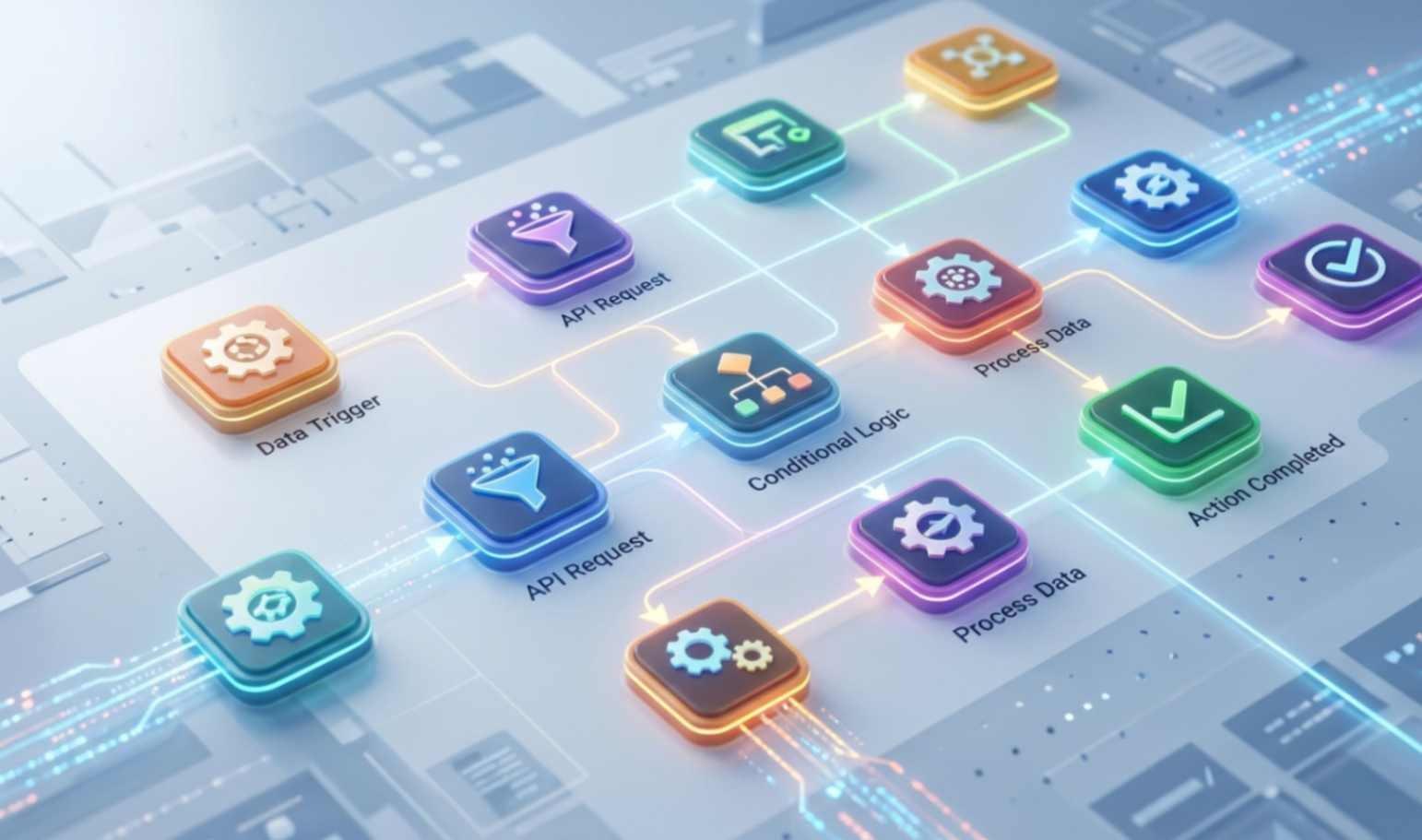
To make this concrete, here's what a typical AI-augmented data pipeline QuickStart looks like architecturally:
Frequently Asked Questions
Ready to get started?
Send a brief about your goals and context. I reply within 24 hours with clear next steps.